

Jul 20, 2025
What slow repair teaches us about love, trust, and the language of accountability
When my boys were little and constantly tangled in sibling fights, I created a simple rule for apologies. I had seen, too often, how apologies could be absent, passive, or performative—especially in my marriage at the time. I wanted to raise sons who could do better.
So I made a structure:
How to Apologize in Our House:
- Person Apologizing:
Say you’re sorry. Say what you did that hurt someone. - Person Receiving the Apology:
Thank them for the effort. Say how their action made you feel. - Person Apologizing Again:
Listen. Acknowledge the harm. - Both:
Let it go. Start with a clean slate.
It worked—when they were young. Back then, the harm was mostly minor and the stakes were low. But life gets more complicated.
So do apologies.
Now, the apologies we exchange are layered with trauma, trust issues, and histories of harm—not just from me to them, or them to each other, but also from the world around them. Their father. Broken friendships. Internalized beliefs about themselves. And yes, from me, when my own trauma responses spill out louder than I mean them to.

When Apologies Are Wrapped in Fear
We’re told that healing begins with a good apology.
But sometimes, healing begins with a hand silently passing you a plate of food.
A gift chosen with care.
An unexpected, quiet “I got this, Mom.”
And in that moment, you realize: this is their way of saying I hurt you—and I want to make it right.
The Truth About Quiet Apologies
The steps I once taught my boys don’t always translate to adulthood.
Not because they’re wrong—but because safety now shapes the pace of repair.
My sons, like many men and boys, have learned that vulnerability is risky. They’ve been burned by apologies that changed nothing. And so now, even with me—their most stable parent—they move carefully. Slowly. Apologies come in acts of service. In a repair made to something I didn’t ask for help with. In watching over their younger sister with tenderness when I’m worn down.
These are not performative gestures.
They are cautious attempts to repair.
They are love, spoken in a language shaped by fear.
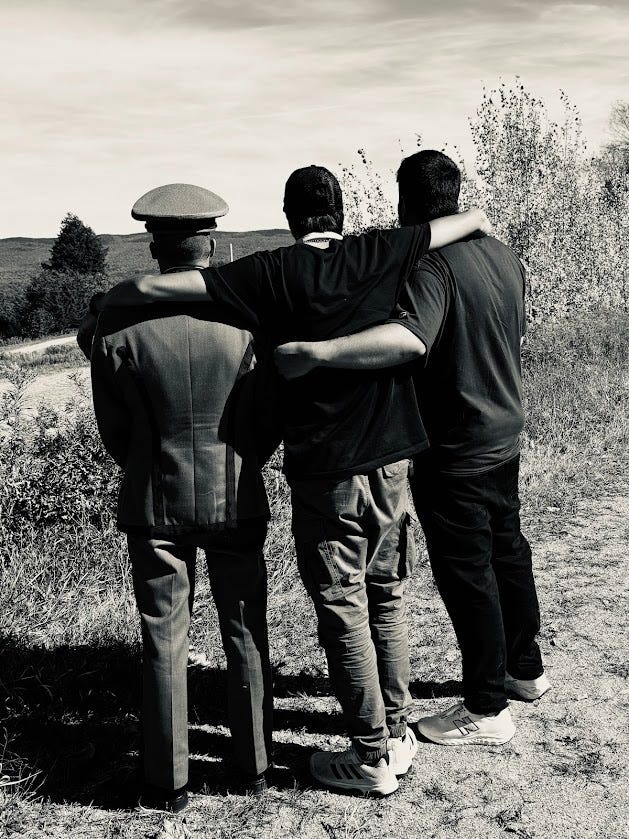
“I see what I did. I don’t know how to say it, but I want to rebuild with you.”
That’s what these quiet apologies whisper.
And I’ve had to learn how to hear them.
The Fragility of Repair
It took time for me to accept apologies that didn’t come with words.
I’m a woman of words—both written and spoken. When I’ve hurt someone, I name it. I make a plan to change. I initiate repair intentionally.
But for my sons, and many others like them, the apology may never sound like “I’m sorry.”
It may sound like:
- “I picked this up for you.”
- “Want me to handle that?”
- “How was your day?”
Sometimes it’s not avoidance—it’s self-preservation.
We’re all walking on the eggshells of the past, still craving the connection that once held us closer.
Sometimes Accountability Moves at Its Own Pace
We want clean closure. Fast healing. Neatly tied apologies.
But the truth is, real accountability can be slow.
It comes in effort. In consistency. In showing up again and again.
I still wish, sometimes, for my sons to say the words out loud.
But then they fix something I didn’t know was broken.
Or take their sister’s hand and help her rearrange her room.
And in that quiet, I hear it:
“I love you. I remember what I did. I’m trying.”
That’s the repair.
That’s what we’re learning, together—that repair is a language, too.
What a Real Apology Can Look Like
Not all apologies come wrapped in words.
Some arrive slowly—through changed behavior, softened eyes, a dish washed without being asked.
Especially in families, where wounds run deep and trust is earned over time, apology isn’t always a single moment. It’s often a quiet movement.
So what does it mean to receive an apology that isn’t spoken?
It means we have to listen with more than our ears.
We notice the shift.
We honor the effort.
And we hold our pain with compassion, not silence it just because someone is trying.
Here’s what I’ve learned:
1. A wordless apology is still real—if it’s backed by change.
Gifts, gestures, or quiet actions can be sincere. But only if they’re rooted in awareness and growth.
Ask yourself: Are they showing up differently over time?
2. You can stay open to repair without abandoning your pain.
Two truths can exist at once:
I am hurt.
And I see you trying.
Healing lives in that space.
3. Performance looks good. Presence feels good.
A dramatic apology might look like care.
But presence is felt. It’s consistent. It doesn’t need attention—it needs safety.
4. Model what you want to receive—even when it’s hard.
As parents, we expect apologies from our children. But do we offer our own?
Our kids learn repair by watching us. When we say “I was wrong,” they learn it’s safe to do the same.
And when they come to us with a gift, a hug, or a quiet kindness, we can receive it with the same grace we hope to be given.
Final Thought
No apology is perfect.
But if it’s humble, consistent, and rooted in love, it’s enough to begin again.
Again and again—because that’s what repair really is:
A choice to keep rebuilding, even after the break.

Leave a Reply